Unpacking "Schoolhouse Rock!": How the '70s Changed Saturday Mornings Forever
If you grew up in the 1970s—or if you’re just a fan of pop-culture history—chances are you can’t think of the preamble to the U.S. Constitution, a conjunction, or the number three without singing.
That is the profound, enduring legacy of Schoolhouse Rock!**.
Debuting in January 1973, this series of three-minute animated musical shorts didn't just teach a generation of kids their times tables and grammar rules; it revolutionized children’s television. During a decade often remembered for its cynical post-Watergate politics and economic grittiness, Schoolhouse Rock! was a burst of pure, joyful, educational counterculture that fit perfectly into the 1970s landscape.
The Origin Story: A Father's Frustration
Like many great inventions, Schoolhouse Rock! was born out of a real-world problem. In the early 1970s, David McCall, an advertising executive, noticed his young son was struggling to memorize his multiplication tables. Yet, the boy could effortlessly remember every single lyric to the latest rock-and-roll songs on the radio.
McCall had a brilliant epiphany: If you want kids to learn, marry the data to a catchy hook.*
He hired musicians to write educational songs, but the project truly found its magic when it landed on the desk of Bob Dorough, a jazz pianist and composer. Dorough wrote a tune called "Three Is a Magic Number."
When ABC television executives (including legendary children’s programming head Michael Eisner) heard the demo and saw the rough animation storyboard, they bought it on the spot.
The Sound of the '70s: Jazz, Rock, and Soul
What separated Schoolhouse Rock! from the dry, patronizing educational content of the past was its musical credibility. The show didn’t use generic "children's music." Instead, it leaned heavily into the rich, diverse sounds of the 1970s radio dial: folk, funk, jazz, gospel, and blues.
The Iconic Vocals
The show enlisted incredible vocal talents that gave each short an undeniable groove.
- Bob Dorough’s quirky, laid-back jazz vocals anchored favorites like "My Hero, Zero" and "Conjunction Junction."
- Jack Sheldon, a renowned jazz trumpeter with a uniquely raspy voice, brought life to "I'm Just a Bill" and "The Preamble."
- Essra Mohawk, a folk-rock singer-songwriter, delivered the soaring, soulful vocals for "Interjections!" and "Sufferin' till Suffrage."
Decoding the 1970s Eras
Throughout the decade, Schoolhouse Rock! evolved in thematic blocks, capturing the shifting cultural priorities of the era.
1. Multiplication Rock (1973)
The original series tackled math. From the psychedelic animation of "Three Is a Magic Number" to the soulful funk of "I Got Six," it proved that numbers didn't have to be sterile. They could groove.
2. Grammar Rock (1973–1974)
Arguably the most famous run, this series turned abstract parts of speech into living characters. We watched a lonely locomotive engineer hook up phrases in "Conjunction Junction," and cheered for Rufus Xavier Sarsaparilla as he used pronouns to avoid repeating long names.
3. America Rock (1975–1976)
Timed perfectly with the 1976 U.S. Bicentennial, this series tackled history and government. It didn't shy away from complex ideas. It explained the separation of powers through a literal three-ring circus ("Three-Ring Government") and detailed the arduous journey of legislation through a sad, rolled-up piece of paper sitting on the steps of Capitol Hill ("I'm Just a Bill").
4. Science Rock (1978–1979)
As the decade closed, the show introduced kids to anatomy, energy, and astronomy. "Interplanet Janet" rode a rocket through a solar system that looked like a neon disco, while "The Body Machine" broke down human digestion with a funky, mechanical rhythm.
The Power of a 3-Minute Hook
Consider the sheer amount of information packed into "Conjunction Junction." In less than 180 seconds, a child learns the function of a conjunction, the three primary examples (and, but, or), and how they link words, phrases, and clauses.
Why It Mattered
In the 1970s, Saturday morning television was heavily criticized by parent groups and the FCC for being a "vast wasteland" of violent cartoons and loud commercials designed to sell sugary cereal.
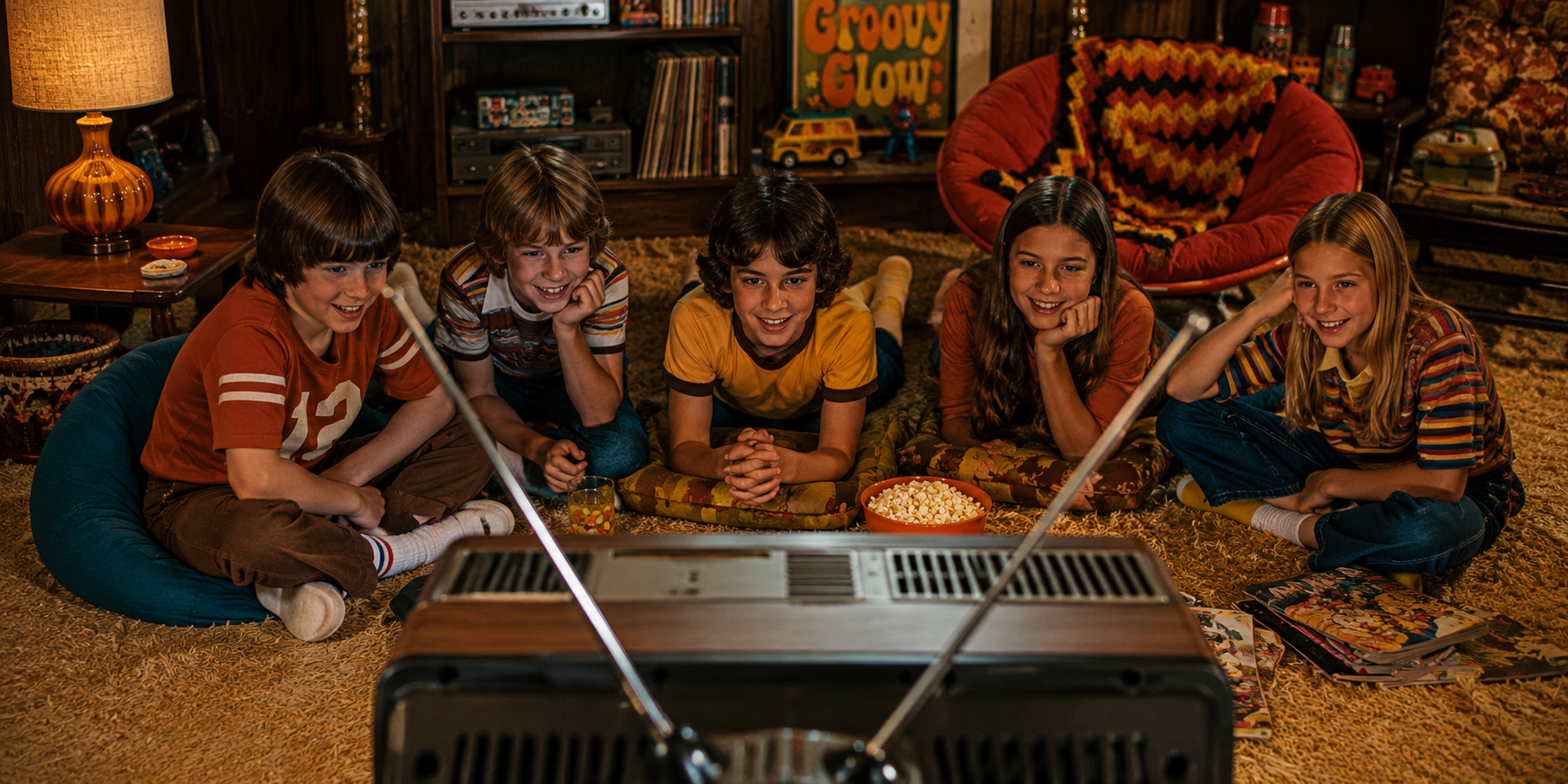
Schoolhouse Rock! was the perfect antidote. It was broadcast between the regular cartoons. Kids who tuned in for Scooby-Doo or Super Friends were suddenly treated to a high-quality music video about adverbs. It didn't feel like school because it respected kids' intelligence and their taste in music.
The Lasting Echo
Schoolhouse Rock! faded from regular rotation in the mid-1980s, but its cultural DNA is permanent. It has been parodied by The Simpsons and Saturday Night Live, covered by '90s indie-rock bands, and used by modern civics teachers to this day.
It proved that learning didn't require a chalkboard or a lecture. Sometimes, all it took was a killer bassline, a bit of colorful animation, and a heavy dose of '70s soul.
Comments (0)
No comments yet. Be the first to share your thoughts.
Sign in in your browser to leave a comment.